

Robert MacIntyre in hot water after opening-round meltdown at Masters
Robert MacIntyre faces possible disciplinary action at The Masters Tournament after a nightmare opening round at Augusta National Golf Club.
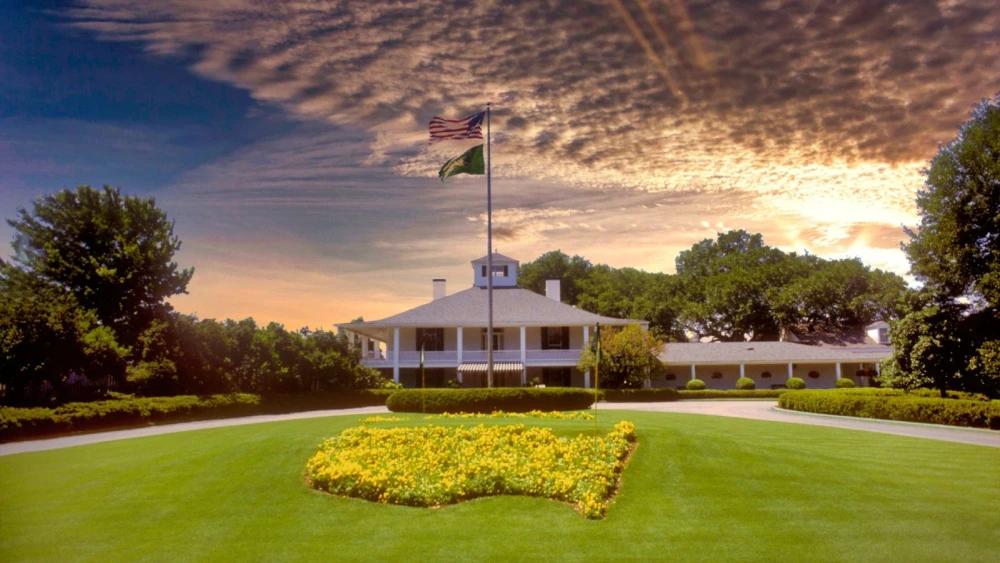
Augusta National Golf Club, considered the masterpiece of the legendary Bobby Jones, was built in the early 1930s and opened in 1934 with hardly any members, but is today rated by Americans in general as their country's most revered course.
It is also the home of the USA's golf-playing elite. Membership is by invitation only and, from the outside looking in, appears to be reserved by and large for the nation's richest and most influential citizens of its business and professional world.
Perhaps because it is in play year after year, whereas its rival courses have to share the other three majors on a rotational basis, Augusta has an advantage, but there is no denying its beauty and conditioning, which is especially evident when the Masters is held there in early spring.
It is not for nothing that it has been rated by the influential Golf Digest as the No 1 Course in the USA for a good few years now.
Every hole on the course is named after a tree or a shrub that grows on the hole, some of them being Magnolia, Pink Dogwood, Flowering Crab Apple and Azalea, but perhaps the most famous holes are the testing 11th, 12th and 13th, which have collectively come to be known as 'Amen Corner', a name given to this difficult stretch by sports scribe Herbert Warren in a 1958 Sports Illustrated article after one of Arnold Palmer's four victories.
CLUB FEATURES
Because of its history, the club has many features, but perhaps the best known are:
The Crows Nest - Reserved for amateurs who have qualified for the Masters by winning the US and British Amateurs, it provides living space for up to five individuals and golfers have to climb a narrow set of steps to get there.
Eisenhower Cabin - One of ten members' cabins on the Augusta National property, it was built for member Dwight D. Eisenhower after his election as President of the United States. The cabin was built according to Secret Service security guidelines, and is adorned by an eagle located above the front porch.
Hogan Bridge - A bridge over Rae's Creek that connects the fairway of Hole 12 to its green. It is constructed of stone and covered with artificial turf. The bridge was dedicated to Ben Hogan in 1958 to commemorate his 72-hole score of 274 strokes five years earlier, the course record at the time.
Magnolia Lane - The main driveway leading from Washington Road to the course's clubhouse. The lane is flanked on either side by 61 magnolia trees, each grown from seeds planted by the Berckman family in the 1850s. Magnolia Lane is 330 yards long and was paved in 1947.
Nelson Bridge - A stonework bridge over Rae's Creek that connects the teeing ground of Hole 13 to its fairway. In 1958, it was dedicated to Byron Nelson to honour his performance in the 1937 Masters.
Sarazen Bridge - A bridge over the pond on Hole 15 that separates the fairway from the green. Made of stone, it was named after Gene Sarazen for his sensational albatross (double eagle) with a four wood at the 1935 Masters tournament, which was called "the shot heard 'round the world" because of all the publicity both he and golf received internationally.
MEMBERSHIP
Georgia's Augusta National Golf Club is one of the most exclusive clubs in sport. The saying goes that without an invitation, you won't get past the front gate.
Until recently when Condoleezza Rice, the former US Secretary of State, and Darla Moore, a prominent South Carolina businesswoman, joined the club on invitation as its first female members, Augusta National had been strongly criticised for its all-male membership list, which has hardly been allowed to grow much beyond the 300 mark.
Members, among them Bill Gates, co-founder and chairman of Microsoft, Warren Buffet, businessman and member of the Forbes 400 List and Jack Welch, former CEO of General Electric, are said to pay annual fees ranging from $25,000 to $50,000.
Along with the legendary Cliff Roberts who led the club and established many of its fundamentals from the time of its inauguration in 1934 until 1976, Augusta has had a total of six chairman, William Porter 'Billy' Payne being the man in charge at the present time.
Other chairman included William Lane (1976-80), Hord Hardin (1980-91), Jack Stephens (1991-98) and William 'Hootie' Johnson (1998-2006), the main target of the Martha Burk-led National Council of Women's until-recently unsuccessful campaign of the past decade to get women admitted to Augusta.
HOLE-BY-HOLE GUIDE
No 1 - Tea Olive - par 4 - 445 yards
A slight dogleg right playing uphill, players must steer clear of the trees on the left. The smallish green demands a precise second shot, nearly impossible if you’re out of position. Tiger Woods has taken a six here, Phil Mickelson a seven.
No 2 - Pink Dogwood - par 5 - 585 yards
Extended by 10 yards in 2024, this par-5 doglegs left, with trees on the left to avoid. Staying right off the tee offers a clearer shot to a green guarded by two large, deep bunkers. Recent green softening slightly eases putting, but length keeps it a brute.
No 3 - Flowering Peach - par 4 - 350 yards
A classic short par four, most players position themselves short of the four fairway bunkers, requiring a full second shot into the pear-shaped green with a steep front slope.
No 4 - Flowering Crab Apple - par 3 - 240 yards
A tough par three needing a long iron to a green flanked by bunkers front right and left. Fairway widening and softened green slopes in recent years offer a touch more forgiveness, but it remains a stern test.
No 5 - Magnolia - par 4 - 495 yards
An uphill, dogleg left where an accurate tee shot avoids multiple fairway bunkers. The tricky green slopes back to front, with a rear bunker snagging overhit shots. Inspired by St. Andrews’ Road Hole, its 40-yard extension in 2019 still resonates.
No 6 - Juniper - par 3 - 180 yards
An elevated tee faces a large, undulating green where pin positions dictate difficulty due to shifting levels.
No 7 - Pampas - par 4 - 450 yards
Once birdie-friendly, this hole toughened with a 35-40 yard extension years back. It now demands a solid mid-iron to a green ringed by five bunkers.
No 8 - Yellow Jasmine - par 5 - 570 yards
A massive par five requiring a precise drive to dodge the right fairway bunker. The long, narrow green lacks bunkers but features mounds that punish wayward approaches.
No 9 - Carolina Cherry - par 4 - 460 yards
A green sloping back to front defines this hole. Aim for the front, or risk rolling off. Driving right avoids the two left greenside bunkers on the second shot.
No 10 - Camellia - par 4 - 495 yards
A steep downhill par four with a central bunker well short of the green. A big right-to-left shot maximizes run, but subtle fairway widening in recent years hasn’t eased its over-par average.
No 11 - White Dogwood - par 4 - 520 yards
Kicking off Amen Corner, this fearsome hole stretched 15 yards in 2022, with the tee shifted left and fairway reshaped. Trees line the right, while water fronts the green and a bunker guards right-center. Larry Mize’s 1987 playoff chip-in remains a rare highlight.
No 12 - Golden Bell - par 3 - 155 yards
One of golf’s iconic short holes, where wind complicates club choice. The wide-but-narrow green demands precision—water lurks in front, trouble awaits behind. A round-maker or breaker.
No 13 - Azalea - par 5 - 545 yards
Lengthened by 35 yards and elevated in 2023, this massive dogleg left tempts players to go for the green in two if they split the fairway. Rae’s Creek tributary fronts the green, with four bunkers lurking beyond, restoring its risk-reward bite.
No 14 - Chinese Fir - par 4 - 440 yards
Augusta’s only bunkerless hole compensates with a sharply sloping green. Two strong shots are needed to reach it in regulation.
No 15 - Firethorn - par 5 - 550 yards
Extended by 20 yards in 2022, this par five challenges with a pond fronting the green and a right bunker. A favorable wind helps, but Gene Sarazen’s 1935 four-wood double eagle from 235 yards remains its defining moment.
No 16 - Redbud - par 3 - 170 yards
Played over water to a green with three bunkers, this large, sloping putting surface requires pinpoint accuracy. Tiger Woods’ 2005 chip-in is its legendary mark.
No 17 - Nandina - par 4 - 450 yards
The Eisenhower Tree once loomed left until its 2014 demise. An accurate second shot is key, as the green slopes off in all directions.
No 18 - Holly - par 4 - 478 yards
An uphill dogleg right, stretched 13 yards in 2022 via a deeper tee box, with two left fairway bunkers in play. The deep, narrow green, flanked by more bunkers, cements its status as a legendary finisher.
Robert MacIntyre faces possible disciplinary action at The Masters Tournament after a nightmare opening round at Augusta National Golf Club.

England's Aaron Rai claimed victory in the 2026 Masters Par 3 Contest, while South African great Gary Player rolled back the years with a memorable moment at Augusta National.
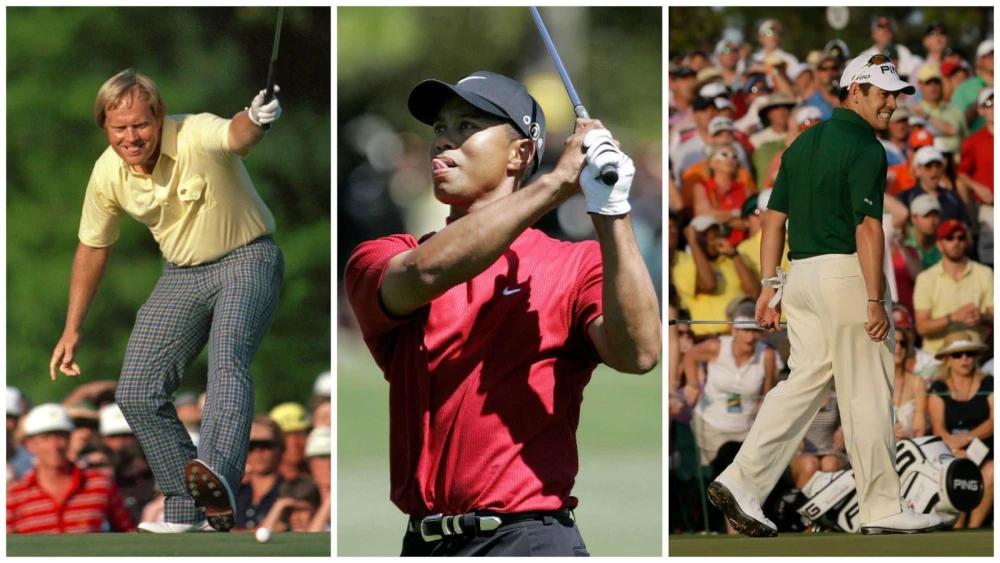
The Masters gets underway on Thursday, and we've taken a trip down memory lane to recount the 10 best shots ever played at the tournament.

Three-time champion Phil Mickelson has pulled out of next week's Masters tournament, citing an ongoing personal family health issue which has also limited his participation in LIV Golf.